

Automatic irrigation is one of the highest-impact upgrades for gardens, lawns and small farms: it saves water, reduces labour, improves plant health and keeps lawns looking great year-round. If you’re in Kenya and wondering “How much will it cost?”, this guide walks you through system types, realistic cost bands (budget, mid-range, premium), a line-by-line cost checklist, DIY vs pro trade-offs, sample budgets for common property sizes and tips to get the best value with direct product links to Eden Lawn & Garden Centre so you can source parts and request a site quote.
Want a tailored quote? Request a site survey and free estimate with Eden: Request a site quote.
Which irrigation system is right for you?
- Drip irrigation (micro‑irrigation): Best for kitchen gardens, fruit trees, flower beds and vegetable plots. Highly water-efficient and precise. See Eden’s drip kits: Drip irrigation kits.
- Sprinkler (pop‑up or fixed): Ideal for lawns and larger, evenly‑graded areas. Simpler coverage but less water-efficient than drip.
- Micro‑spray & mist systems: Good for delicate seedlings, greenhouse benches and mulched beds.
- Automated systems with controllers & pumps: Any of the above can be automated for convenience, add a timer/controller and (if needed) a pump and filters.
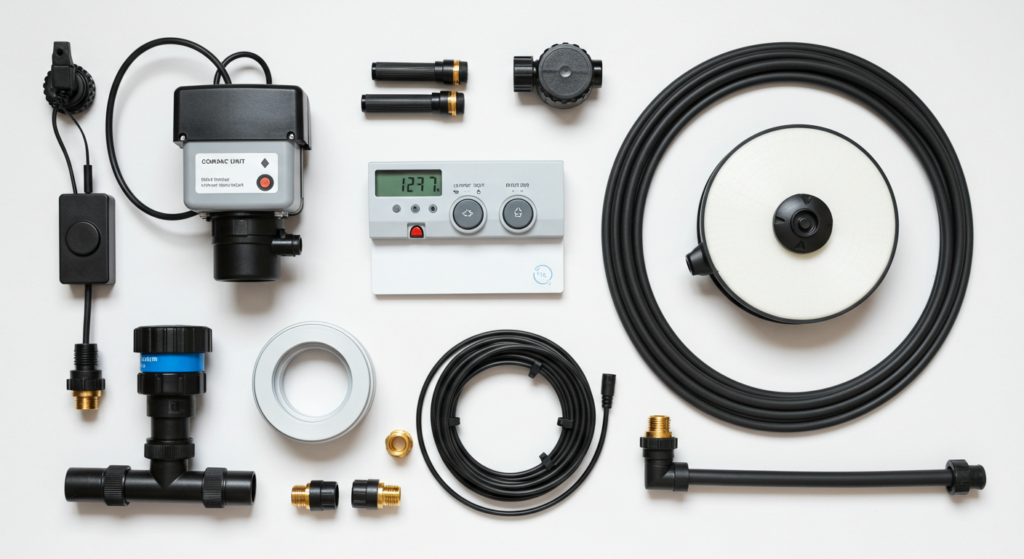
Cost components – what you’ll pay for (checklist)
- Design & site survey: layout planning, emitter spacing and zoning.
- Mainline piping and lateral lines: PVC/PE pipe, fittings, valves.
- Emitters & sprinklers: drippers, micro‑sprayers, pop‑up sprinkler heads.
- Controller (timer): from basic 1‑zone timers to smart Wi‑Fi controllers with multiple zones.
- Pump & pressure system: surface or submersible pump if mains pressure is insufficient; may include pressure tanks or boost systems.
- Pre‑filtration & filters: sediment and disc filters – essential for drip systems.
- Backflow preventer & valves: protects potable supply and allows zone control.
- Labour & installation: trenching, pipe laying, wiring for electric controllers, pump installation and testing.
- Commissioning & training: system testing, controller programming and user training.
- Optional extras: flow meters, soil moisture sensors, rain shutoff switches, mobile control modules.
Understanding cost bands (budget, mid-range, premium)
Below are qualitative bands to help you evaluate quotes. Exact prices vary with property size, terrain and component brands – request a site quote from Eden for a precise figure.
- Budget (entry-level / DIY): Basic drip kits or small sprinkler kits using off-the-shelf components. Good for small vegetable patches, balconies or tiny lawns. May require manual switching or simple timers. Ideal when you want low upfront cost and are comfortable DIYing.
- Mid-range (reliable performance): Professionally designed drip or sprinkler layouts, branded emitters, an intermediate controller with 4–6 zones, basic filtration and a modest pump (if needed). Suits medium gardens, small estates and productive kitchen gardens.
- Premium (commercial / fully automated): High-quality components (industry branded emitters and rotors), smart controllers with remote access, robust pumps with pressure regulation, multiple zones and sensors. Best for large lawns, commercial landscapes and users who want low maintenance and maximum automation.
DIY vs Professional installation – pros and cons
DIY (cost-saving, hands-on): – Pros: Lower labour costs, faster for small projects, great learning experience.
– Cons: Risk of incorrect emitter spacing, poor hydraulics, frequent clogging, and inefficient water use. Warranty and support can be limited.
Professional installation (recommended for medium & large systems): – Pros: Proper design & zoning, correct pump sizing, filtration and long-term reliability. Professionals also provide commissioning and training.
– Cons: Higher upfront cost, but often lower lifetime cost due to fewer failures and better water efficiency.
If you’re unsure, Eden offers a hybrid approach: buy components and book professional commissioning or a short paid site visit to finalize layout and controller programming.
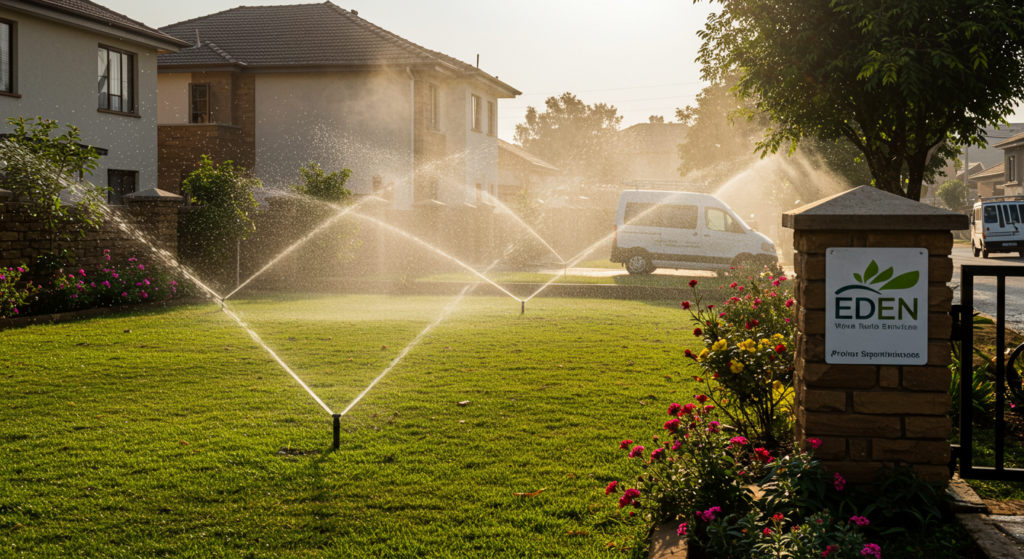
How to choose the right parts (practical tips)
- Pump sizing: Choose a pump by required flow (litres per minute) and head (vertical metres). Undersized pumps cause poor coverage; oversized pumps waste energy and may need pressure regulation. Eden Irrigation pumps & boosters.
- Emitter type: Use low‑flow drippers (1–4 L/hr) for vegetable rows and adjustable drippers for mixed plantings. Use micro‑sprays for wider coverage in planted beds.
- Filter selection: Always install a filter upstream of drip lines – disc or screen filters protect tiny drippers. See: Irrigation filters.
- Controller features to consider: number of zones, rain sensor input, seasonal run time, Wi‑Fi / smartphone control. Example: Automatic controllers.
- Pipe materials: Use UV‑stable polyethylene for laterals and schedule‑rated PVC for mains where needed.
Sample budgets & scenarios (planning aids)
Below are realistic sample budgets for three common project sizes in Kenya: a small townhouse lawn / kitchen garden (50–200 sqm), a medium garden / small estate (200–1,000 sqm), and a smallholder plot (0.25–1 acre / ~1,012–4,047 sqm). Each scenario shows typical components, example unit prices and an estimated total range. Prices vary with terrain, water source and component brand – use these as planning aids and request a site quote for an exact figure.
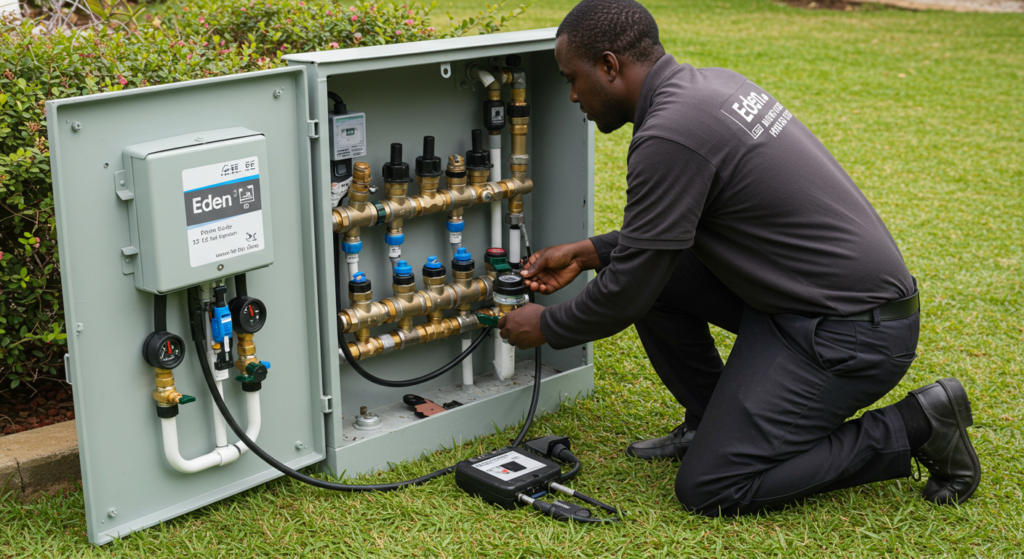
Assumptions & sources
- Drip / irrigation kit prices and kit-size ranges from local Kenyan suppliers (AquaHub, Grekkon, IrriHydrosol).
- Small submersible / shallow-well pumps commonly sell between KES 38,000–48,000 for 1.0 – 2.0 HP models.
- Controllers/timers range from cheap hose timers (≈ KES 3,000–6,000) up to multi-zone smart controllers (KES 30,000+).
- Filters/disc filters from KES 900 up to KES 14,000 depending on size.
- Labour and installation rates vary widely; typical daily specialist rates or contractor pricing are referenced to local landscaping suppliers. Expect small projects to use gardener teams (KES 1,000–2,500/day) and specialized installers charging higher day rates or fixed quotes.
Small townhouse lawn or kitchen garden (50–200 sqm) — Estimated budget: KES 15,000 – 35,000
Typical setup
- Basic drip kit or micro-spray layout, small inline filter, 1-zone timer, small rolls of dripline, fittings and minimal labour (or DIY).
- Example components & unit prices used:
- 1 small dripline roll / coil or micro-spray set: KES 8,000–9,000.
- Small disc/screen filter: KES 900–1,700.
- Simple hose/timer controller: KES 3,000–6,000 (basic electronic timers available on local marketplaces).
- Fittings, short PE tubing & connectors: KES 2,000–5,000. (market average)
- Labour / minimal installation or DIY: KES 0–5,000 (depending on whether you DIY or hire a helper).
Why this range: a compact DIY drip or micro-spray system for a small yard can be delivered cheaply if you do much of the work yourself. If you ask for professional commissioning the upper end (KES ~35,000) covers better filters/timer and a short labour charge.
Medium garden / small estate (200–1,000 sqm) – Estimated budget: KES 60,000 – 150,000
Typical setup
- Professionally-designed layout with 2–6 zones, combination of pop-up sprinklers for lawn areas and drip lines for beds, better filtration and a modest pump if mains pressure is weak.
Example components & unit prices used
- Mid-size drip / sprinkler kit (1/4 acre ≈ 1,000 sqm) from local suppliers: KES 33,000–55,000 (kit price, including common emitters/lines).
- Small pump (if required): KES 38,000–48,000 for common 1–2 HP submersible/ surface units.
- Controller (4–6 zone): KES 6,000–25,000 depending on brand and smart features.
- Filters & pressure regulators: KES 1,700–3,000 (typical disc filter for small-medium farms).
- Pop-up sprinklers / micro-sprays & fittings: KES 3,000–15,000 depending on size and number.
- Labour & installation (professional): KES 10,000–30,000 (site-dependent; includes trenching, pipe-laying and commissioning).
Why this range: a professionally installed 1/4 acre system typically sits in the KES 33k–55k kit range, but adding a pump, a mid-range controller, professional labour and better filtration pushes the total into the KES 60k–150k bracket.
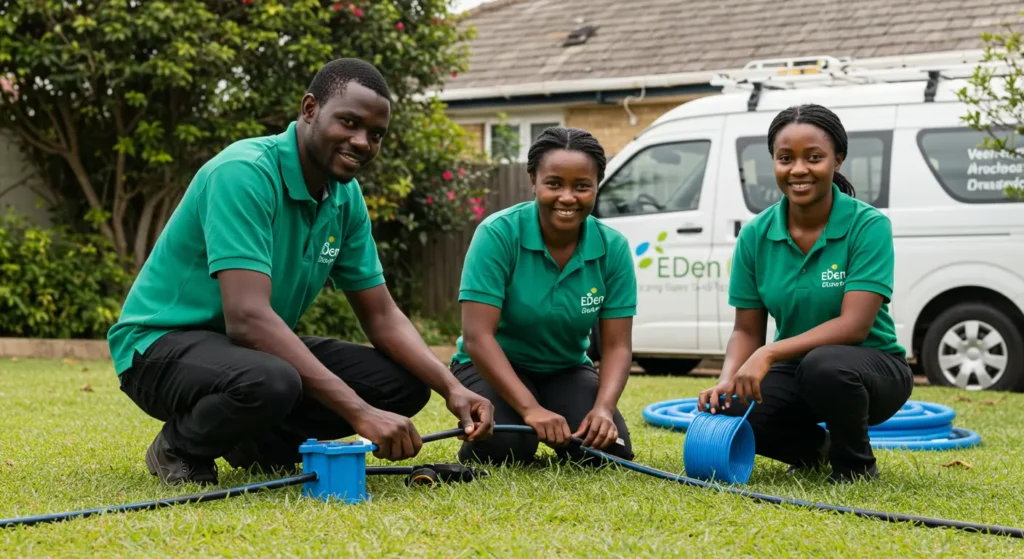
Smallholder / 0.25–1 acre (≈ 1,012–4,047 sqm) – Estimated budget: KES 120,000 – 350,000+
Typical setup
- Full drip system for rows or horticulture, industrial-quality filtration, a correctly sized pump (submersible or surface), multi-zone controller, pressure regulation and professional installation & commissioning.
Example reference prices & components
- Common supplier kit ranges: ½ acre kits KES 70,000–90,000; 1 acre kits KES 135,000–180,000 (basic to mid-range drip kits; final price depends on driplines per bed and complexity).
- Pump (robust 1.5–3.0 HP or multistage): KES 38,000–70,000+ depending on type (submersible, multistage or solar option).
- Filters & backflow / pressure units: KES 3,000–14,000 depending on size/capacity.
- Professional design, trenching, longer labour and commissioning: KES 20,000–80,000+ depending on site complexity and contractor terms.
Why this range: basic 1-acre drip kits are widely quoted between KES 135k–180k, but adding a correctly sized pump, robust filtration, more zones and professional installation can push the project to the KES 200k–350k+ bracket.
Running costs – pump electricity example (practical calculation)
A common concern is how much it costs to run the pump. Below is a simple example you can paste into the blog.
Example: 1.5 kW pump running 2 hours per day.
- Daily energy = pump power × hours per day = 1.5 kW × 2 h = 3.0 kWh per day.
- Monthly energy (30 days) = 3.0 kWh × 30 = 90 kWh per month.
- Typical residential electricity rate (example): KES 16.45 per kWh (this varies monthly and by tariff). Using KES 16.45: monthly cost = 90 kWh × KES 16.45 = KES 1,480.50 → ≈ KES 1,481 / month.
Notes:
- If you use a petrol/diesel-powered generator for pumping, fuel costs must be estimated separately. Solar pumps can reduce running costs but have higher capital expenditure. See local pump suppliers and solar options for accurate comparisons.
Ready to transform your garden or farm? Get a free quotation and one-on-one consultation with Eden Lawn & Garden Centre technicians, we’ll visit your site (or review your plan), recommend the right irrigation layout and equipment and provide an itemized quote so you can budget with confidence. Browse and buy top-quality pumps, controllers, drip kits and more at the Eden Marketplace and request your free quote or start shopping now at new.edenlg.co.ke/.
