

When the glass-and-concrete tower on Riverside put up a “Rooftop Terrace Available” banner, no one guessed that a patch of basil would make the headlines.
Miriam moved into 7B because the brochure promised “luxury amenity space.” On the building’s neat rooftop, developers had left a tidy row of planters, mostly decorative, mostly empty and a brochure that pictured cocktails rather than carrots. Miriam, who used to help her grandmother grow sukuma and coriander in a kisima-pot back in Kibera, saw different possibilities. She saw food, shade and a place where Jimmy, her neighbor’s boy could learn that life didn’t only come from a supermarket shelf.
She asked the management for permission to install modular planters and a small drip system. At first, everyone smiled politely. Then the smiles stopped. The building’s owner, she later learned, had cut corners: no real waterproof membrane under the roof, inadequate drainage outlets and a structural plan that assumed the rooftop would be light — not laden with soil, rain barrels and growing humans.
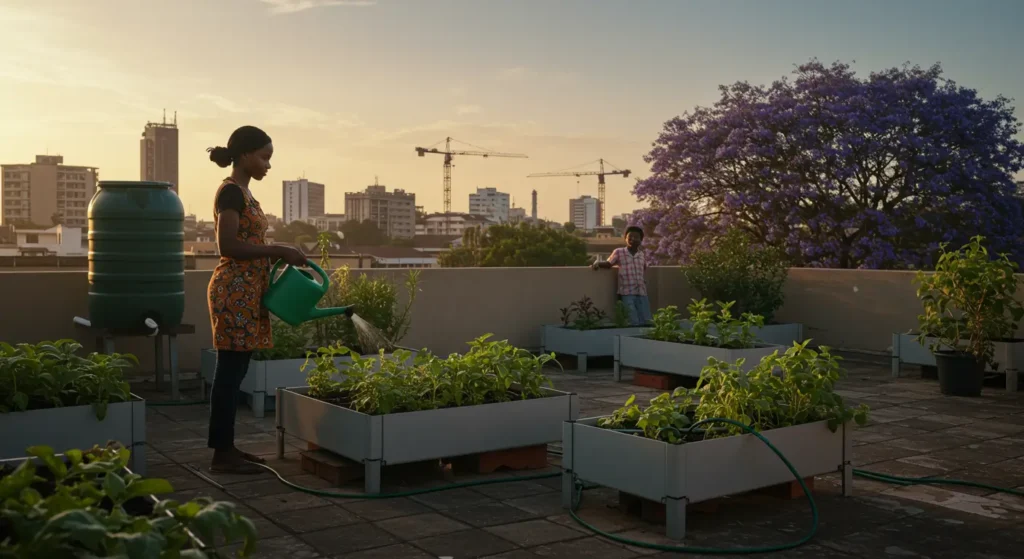
When Miriam and the tenants quietly installed a few lightweight EdenSky modular planters and a rain butt to harvest rooftop shower runoff, the rooftop began to leak, slowly at first, then like a confession. A plaster ceiling in the penthouse below started to bubble; a wall developed a wet, dark streak.
The owner called lawyers. Insurers balked. An engineering assessment exposed the truth: the rooftop had been over-promised and under-built. The remediation costs were more than expected. The developer, who’d counted on selling “lifestyle” rather than building well, found the numbers reversed. The story that made morning radio wasn’t just about basil and taste buds, it was about accountability. The rooftop did not bankrupt the developer; his shortcuts did.
This moment matters to anyone in Nairobi thinking about a rooftop garden. It’s not a warning to stop planting, it’s a call to plant wisely.

Why the controversy? (And why rooftop gardens are still worth it)
Rooftop gardens change the city: they cool buildings, slow stormwater runoff, grow food and create community. But when installation ignores structure, waterproofing and drainage, the “green promise” becomes a legal and financial headache. The real culprit is not the gardener, it’s the rush to market without proper checks.
Practical rooftop tips woven into the tale (so you don’t end up in court)
- Do a structural assessment first. Before soil is lifted, get a structural engineer to confirm the roof can carry the load of planters, storage tanks and people. Lightweight EdenSky Modular Planters (recommended) lower weight per square metre compared with concrete troughs.
- Waterproofing is non-negotiable. Insist on a membrane and root barrier. If your building lacks these, budget for a certified contractor to install a membrane like a bitumen or PVC system before planting.
- Prioritise drainage. Use raised trays with proper outlets and install downpipes to carry excess water to gutters or to an EdenRain 200L water butt for reuse. Waterlogged planters kill plants and the roof.
- Use lightweight growing media. Opt for a lightweight mix (coir, perlite, compost) rather than garden loam. We suggest a blend similar to EdenLight Soil Mix – it reduces load and improves aeration.
- Choose the right plants. Drought-tolerant natives and small fruiting shrubs (moringa, dwarf pawpaw, hardy herbs) are low-maintenance winners for Nairobi roofs. Avoid massive trees unless engineering allows it.
- Install a micro-drip system. A EdenDrip Smart Kit with a timer prevents over-watering and saves water. Tie it into harvested rainwater for sustainability.
- Form a rooftop stewardship agreement. If multiple residents use the space, sign a simple agreement covering maintenance, watering schedule and cost-sharing for repairs, the same way Miriam’s tenants did before the leak became a mess.
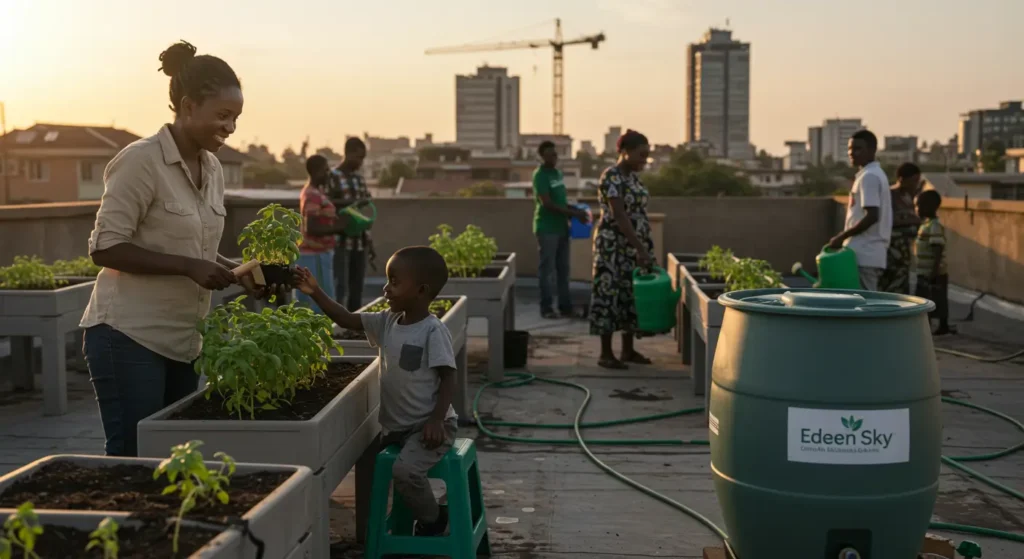
Miriam’s rooftop became a small revolution: neighbours who barely spoke now swapped seedlings; the penthouse owner eventually joined to learn about water-saving.
If you’re in Nairobi and ready to make a rooftop that feeds people — not lawsuits — Eden Lawn & Garden Centre can help. We offer structural checklists, lightweight planter kits, rainwater systems and installation services.
Start with a free rooftop checklist and a 20-minute consultation. Contact Us Today
