

That morning at Eden Lawn & Garden Centre started like any other — the kind of calm, methodical morning that makes you believe the day will stay predictable.
The showroom was silent except for the soft hum of the fridge in the staff lounge. My cup of milky chai sent up lazy curls of steam as I ran through the day’s checklist: a few deliveries to schedule, some machines to service, and a training session for one of our new technicians. Sunlight slanted through the glass walls, catching the chrome edges of neatly lined mower decks. It all felt under control.
Until the phone rang.
On the other end was Mrs. Taylor, her voice trembling. She lives in one of those leafy, spacious suburbs where lawns stretch like green carpets. And she was at her breaking point.
“This is the fourth mower I’ve bought,” she said, on the edge of tears. “They just keep breaking down. Every brand, every model — and today my gardener says this one’s given up too. I can’t keep wasting money like this.”
She passed the phone to her gardener, whose voice carried the weight of dread. “I’ve serviced it regularly,” he explained, “I used it carefully… but it just can’t handle the whole yard.”
That was the missing piece.
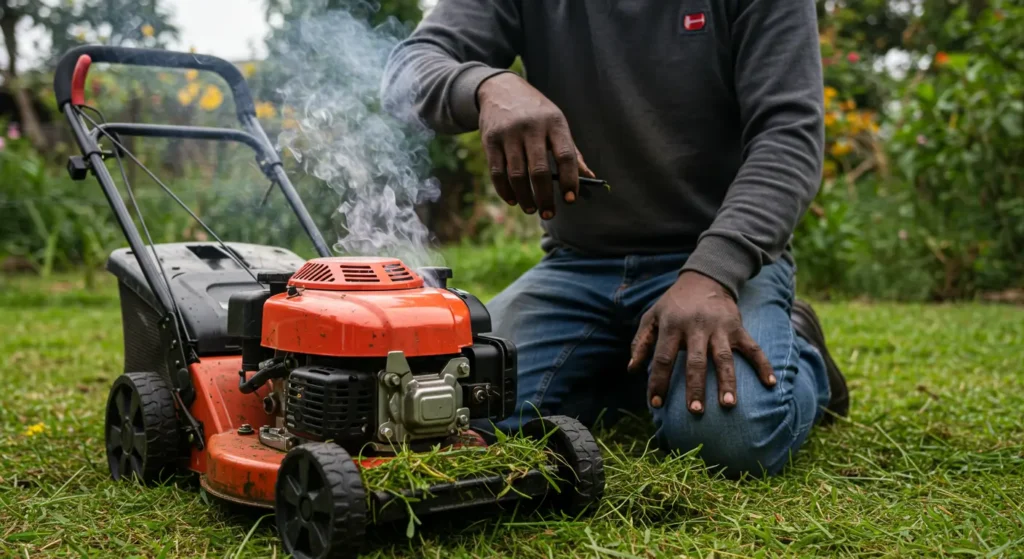
It wasn’t about brand loyalty or bad luck. It was about mis-matching the machine to the job. The mower she’d bought — like the others before it — was far too small for the size of her property. They were overworked, run for hours on end across grass that had grown tall and thick because mowing was infrequent. The machines never stood a chance.
Her frustration was heartbreaking — and entirely avoidable. She had guests arriving that evening, her garden looked wild, and she felt like she had failed.
That call is why I decided to write this guide. Because this happens everywhere: people buy mowers based purely on price, not on the size of the space or the amount of work they expect them to do. And it’s a trap. Some end up with huge, expensive machines they barely use; others end up with small ones that burn out after months of being pushed beyond their limits.
So today, let’s fix that.
Here’s how to choose the right mower for your lawn size — and what to do if your budget is tight, including when a brush cutter might actually be the smarter, cheaper hero.
Quick view: Match mower type & engine power to lawn size (practical, in square metres)
(Use this as a rule-of-thumb. Terrain, obstacles, grass type and mowing frequency matter.)
- Very small yards / balconies – under 250 m²
Best: electric push mowers or small petrol push mowers (light engines / battery packs). Fast, quiet, easy to store.
Why: deck width and agility beat brute power for tiny plots. - Small lawns – 250 m² to ~600 m²
Best: self-propelled or heavier push mowers (engine roughly equivalent to 3–6 HP / 120–200 cc petrol engines or medium battery packs). Good compromise of speed and control. - Medium lawns ~600 m² to 2,000 m²
Best: robust self-propelled walk-behind with a larger engine, or consider a small ride-on (engine and deck grow accordingly). These jobs need torque and larger decking to save time. - Large properties – 2,000 m² (0.5 acre) and above
Best: ride-on mowers / zero-turn mowers with 12+ HP (engine sizes and decks scale up rapidly). For 1–3 acres look toward 14–20 HP ride-ons; above that, commercial machines.
(Note: manufacturers quote horsepower and deck widths differently, always compare the use case (area, obstacles, slope) more than the raw HP number.)

Why engine size matters (and what “overworking” actually costs)
- Power vs. torque: a higher HP engine delivers more torque to the blade and wheels so the machine won’t bog down on long grass, thick clippings or slopes. Without adequate power you’ll be making multiple slow passes and stressing the engine.
- Overwork problems: running a small engine across too large or dense an area causes overheating, oil starvation, clogged cooling fins and accelerated wear – problems that often aren’t covered by warranty if routine maintenance was neglected. Regular maintenance and correct machine sizing avoid these failure modes.
- Time cost vs. purchase cost: a cheap mower that takes twice as long to finish costs you labour, time and often repairs. A correctly sized machine is an investment in productivity.
Practical guidance – pick by job, not price
Use these short scenarios to choose:
- I maintain a small garden with flower beds and paths (200-400 m²).
Choose: battery/electric push or a light self-propelled petrol mower with ~3–5 HP equivalent and a 40–50 cm deck. Easier storage and lower noise for neighbours. - I’m a landscaper with multiple urban compounds (each 600–1,500 m²).
Choose: a durable self-propelled walk-behind with a stronger engine (5–9 HP range equivalents) and good blade/drive gearing or a compact ride-on if you need speed and day-long durability. - I manage a hotel/club ground or big estate (>2,000 m²).
Choose: ride-on / zero-turn with 14+ HP and wide decks (42″ / 107 cm and up). These are designed for long runs and quick turnarounds.

On budgets: how to make a smaller mower work – and the tradeoffs
If money is tight, smaller machines can cover the work but you must change how you work and maintain the machine.
Do this to stretch a small mower safely:
- Divide the job into smaller sections. Mow in blocks (100–200 m² at a time) and give the engine a 5–10 minute cool-down between blocks. This reduces overheating risk.
- Sharpen blades more often. Sharp blades cut cleanly, reduce load on the engine and improve fuel economy.
- Use mulching mode where possible — it reduces bagging trips and lowers strain from a full catcher.
- Lower cutting height for repeated passes instead of forcing the mower through very tall grass in one go. Two gentle passes are kinder than one brutal pass.
- Strict maintenance schedule: check oil, clean cooling fins, replace air filters and inspect blades — this is the single biggest factor in making a smaller unit last.
Tradeoffs:
- Time: more passes = more labour.
- Wear: more frequent maintenance; some components may wear faster.
- Performance: small machines may not mulch or bag as effectively on heavy, wet cuts.
If the job is regularly larger than the mower’s comfort zone, renting or hiring a larger machine occasionally is cheaper than repeated repairs or early replacement.
When a brush cutter (or brush mower) is the better alternative
Not all green jobs are “mow the lawn.” Overgrown edges, thick weeds, saplings and rough fields need a different tool.
- Use a brush cutter when: grass is tall, mixed with woody weeds, or you are clearing overgrown patches that would stall a lawn mower. Brush cutters use metal blades and are designed for tough vegetation; they’re not for finish-work near walls or flower beds.
- Hybrid strategy: use a brush cutter to reclaim or clear the area, then maintain with a mower. A brush cutter can be a cost-effective investment if you regularly take on rough jobs.

What we stock at Eden and where to look on the site
Eden Lawn & Garden Centre curates mowers and garden equipment suitable for Kenyan conditions and urban customers, from compact push mowers to heavier walk-behinds and powered tools. Our shop pages list available models and specs so buyers can match the machine to the job.
Short checklist to guide you as a buyer
- What’s the area (m²) you mow each session?
- Is the ground flat, edged or hilly? (Slopes change choice.)
- How often do you mow? (Frequent mowing favors smaller/electric tools; infrequent heavy cuts need more power.)
- Budget: consider renting a larger mower for occasional big jobs rather than permanently under-powering a job with a small unit.
- Ask seller for: recommended max area per hour, deck width, spare parts availability and local service support (this matters more than a KSh discount at purchase).
